Help with Damp and Mould
Damp & Mould In Your Home
Nehemiah Housing Association provides affordable, comfortable homes within a supportive community, and has a zero-tolerance approach to damp and mould. As soon as tenants report damp and mould to us or we discover it during one of our housing visits then we will take action to tackle and eliminate it.
What Causes Damp & Mould?
Condensation that is left on a surface and not wiped away can cause mould to grow.
When warm air contacts a cold surface, it forms water droplets. If these droplets don’t dry out properly or are not physically wiped away, then this leads to damp and mould.
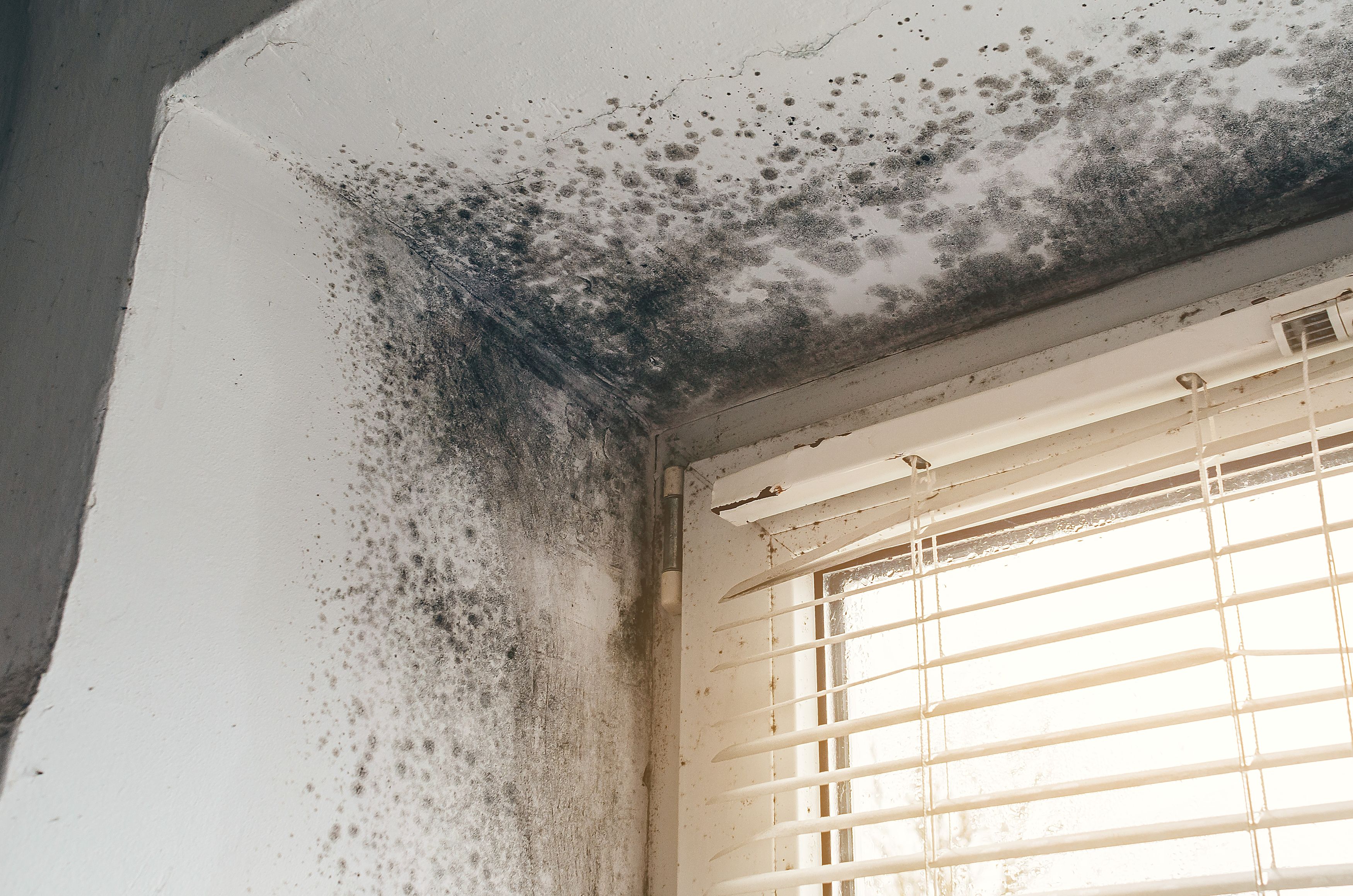
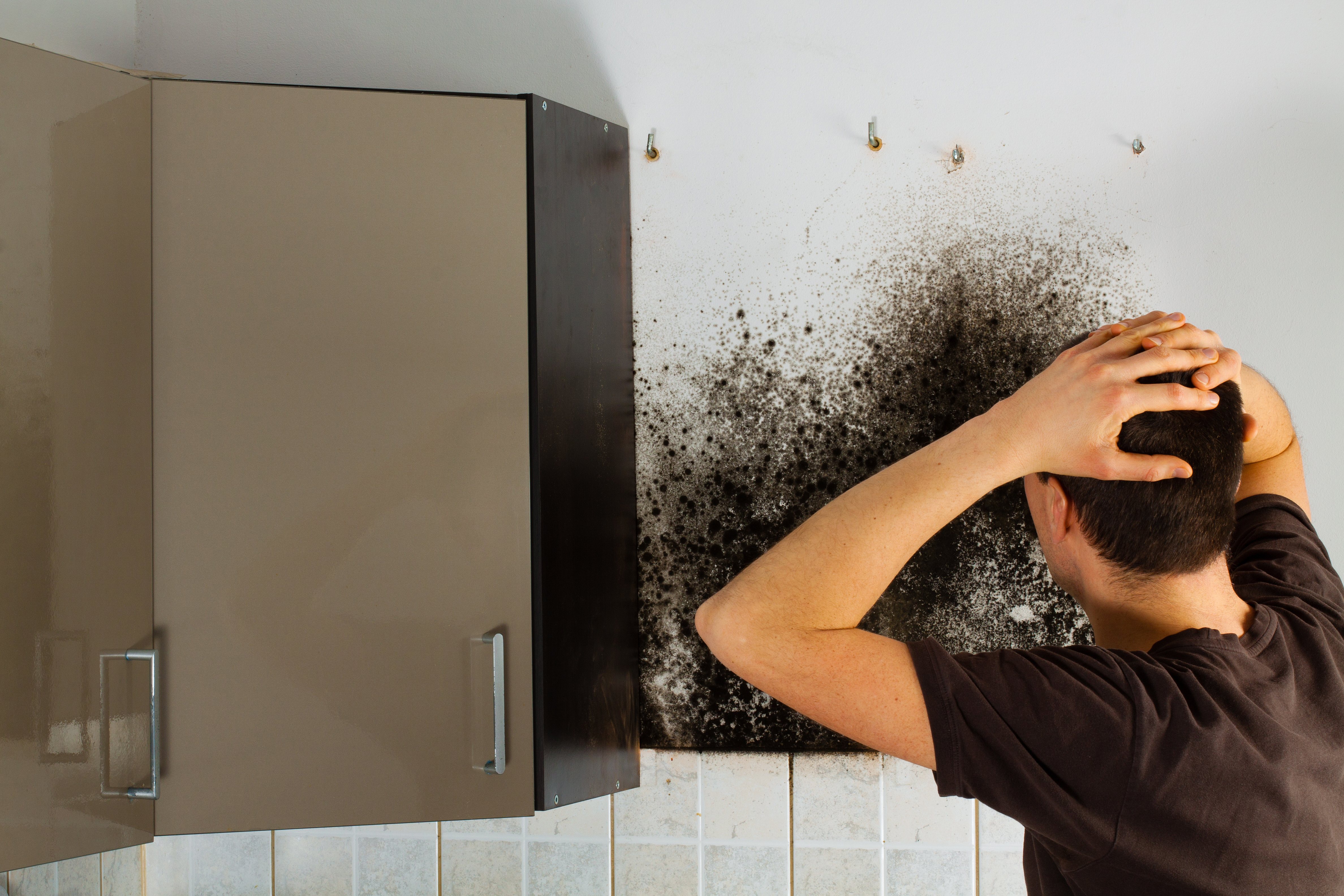
Mould can grow wherever there is moisture, it is usually found in bathrooms and kitchens but can happen anywhere. Mould is a fungus and often appears as black pin pricks on walls or ceilings or furnishings and can have a musty smell – it should be treated as early as possible to prevent it from spreading.
Tips For Preventing Damp & Mould
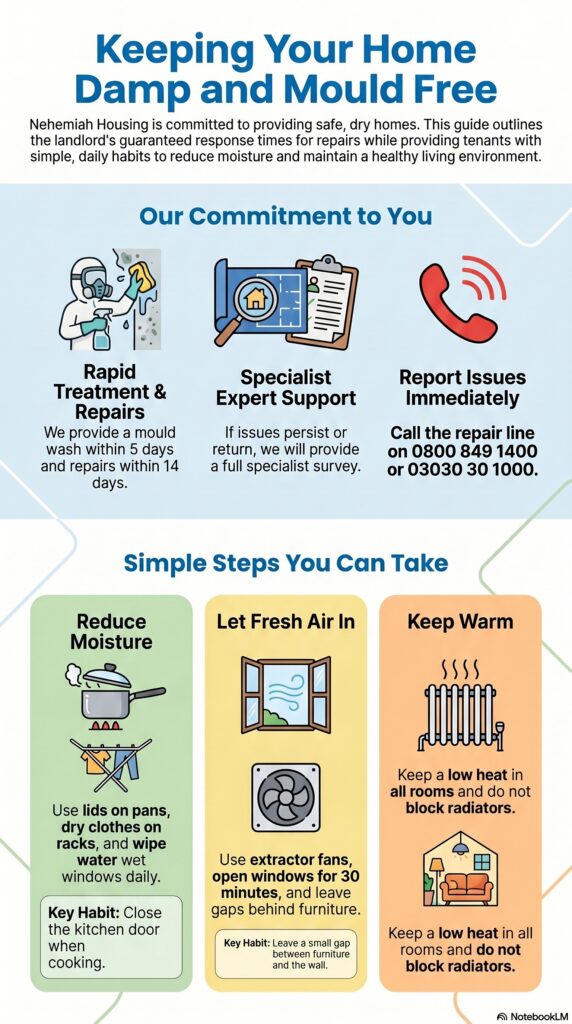
It is important to avoid excess moisture in your home to reduce your risk of getting damp and mould. Keeping your home well ventilated is a great help, as is being vigilant and wiping away any condensation that does form around the house.
As a guide, some of the best ways to manage the moisture in your home to stop mould from growing, include:
- Leave a window open for at least 30 minutes each day
- Close doors and open a window when cooking or showering or use the extractor fan if there is one in the bathroom or cooker hood extractor if there is one in your kitchen
- Run cold water into your bath first before the hot, to reduce steam levels
- Put lids on pans when cooking
- Don’t dry clothes on radiators
- Dry clothes on a drying rack next to an open window with the door closed
- Keep a consistent temperature of between 17 and 21 degrees
- Dry any wet surfaces that you see
- Leave a gap between the wall and furniture
Take a look at more information and tips on helping tackle damp and mould https://nehemiah.co.uk/news/2026/1/20/tips-for-tackling-damp-mould You also download this handy poster
What Should You Do If You Spot Mould In Your Home?
If you see small amounts of mould in your home, for example around the bath or shower sealant or your windows try to remove it by using a mould remover kit. If it reappears or spreads further, then let us know – get in touch with your Housing Officer or any member of Nehemiah staff which includes our repairs team who will arrange to visit your home to assess the situation.
During the visit, we will check everything in your home is okay and identify the cause of the damp and mould. Sometimes, repairs are needed to fix the mould. Once we understand what’s happening, we will make sure the mould is removed and put a plan in place to prevent it coming back.
For particularly bad cases of damp and mould, we use a specialist team to tackle the issue.
More Information
Also take a look at more information on what to do if you find damp and mould in your property HERE
Awaab’s Law and Our Damp & Mould Policy
From Monday 27 October 2025, new legislation known as Awaab’s Law came into force. This law sets clear, legal timeframes for social landlords to respond to and fix serious housing hazards, including damp and mould.
At Nehemiah, we already meet these standards – our policies and procedures ensure that your home remains safe, comfortable, and well-maintained. Our damp and mould policy can be downloaded below.

Still Concerned About Damp & Mould?
To report damp or mould telephone the repair line.
From a landline: FREEPHONE 0800 849 1400
From a mobile: 03030 30 1000
*Calls to 03030 numbers cost the same as a normal land line number (even from a mobile), or are completely free if the caller has free minutes within their mobile phone tariff.